
Scott County Probate Court Records
Scott County probate matters are filed in Scott County District Court. The State Court Structure Map for this project resolves the probate court name as Probate Division of District Court. That wording matters because there is no separate Scott County probate court with its own clerk, record system, or standalone courthouse. Court Administration handles public access, courthouse terminals, certified copies, and copy requests for Scott County District Court probate files.
Probate can include formal probate, other probate, guardianship, conservatorship, and trust case types. Minnesota probate starts when a petition or application is filed and the court appoints a personal representative when appropriate. Venue is generally the county of legal residence at death for a Minnesota resident, or the county where property was owned for a nonresident.
The Minnesota Judicial Branch probate, wills, and estates overview is a successful manifest source for Scott County probate records.
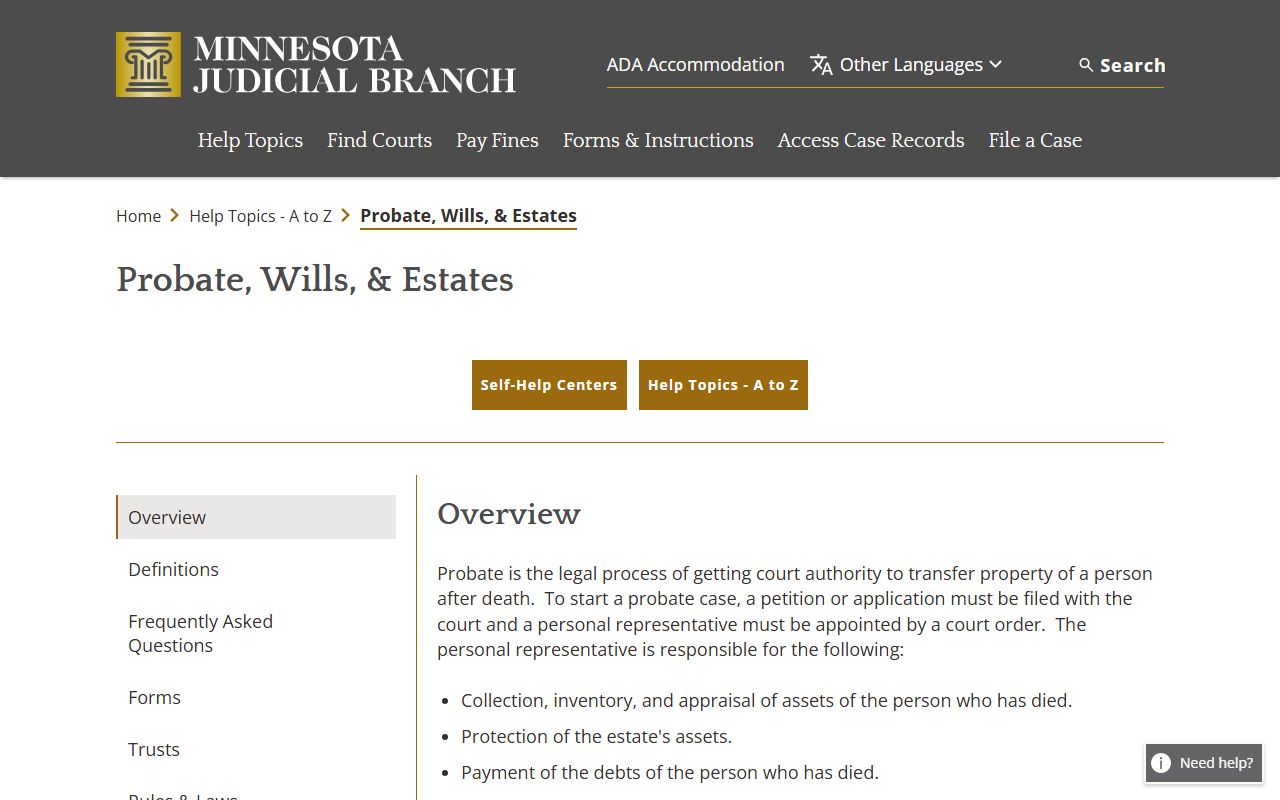
That statewide overview supplies the basic probate process that Scott County applies through District Court.
Scott County Probate Division Contact
Probate filings, copy requests, and courthouse public access for Scott County probate records route through District Court and local Court Administration. Court Administration can certify only Scott County District Court documents. Confidential or sealed documents require a judge's order granting access, and requests for those records use Judicial Branch confidential or sealed record forms.
Probate Division of District Court
Scott County Justice Center, Government Center - JC115
200 Fourth Avenue West
Shakopee, MN 55379-1220
952-496-8200
Fax: 952-496-8211
Scott County Probate Terms
Probate records use terms that are narrower than ordinary property or family records. A short definition set helps separate estate administration from guardianship and conservatorship matters, which can also appear under probate-related court categories in Minnesota.
- Testator
- A person who made a will.
- Personal representative
- The person appointed by the court to handle estate tasks. The term is often used where older forms might say executor.
- Intestate
- Dying without a valid will controlling the estate.
- Guardianship
- A court case about personal decision-making authority for another person.
- Conservatorship
- A court case about financial management authority for another person.
- Small-estate affidavit
- A non-court affidavit process that may be available for certain estates under the Minnesota threshold.
Search Scott County Probate Records
The main online search path is MCRO Case Search. Probate searches are usually done by name, case number, attorney, filing date, case status, and court location. Citation search is not a normal probate path. Select Scott County as the court location when the goal is a local Scott County probate file.
MCRO probate document access is stronger than family-document access. Public documents filed on or after July 1, 2015, in Formal Probate, Other Probate, Guardianship and Conservatorship, and Trust case types are available online if the record is public and remotely accessible. Older Scott County probate documents or documents not available online may require courthouse public access terminals or a copy request to Court Administration.
| Field Label | Type | Required | Options or Notes |
|---|---|---|---|
| Search option | Tab or radio | Yes | Name, Case Number, or Attorney are most relevant for probate. |
| Person or Business | Radio | Conditional | Estate names and parties may be searched depending on record type. |
| Last, First, Middle Name | Text | Conditional | Exact-name search; wildcard after two characters; Sounds Like optional. |
| Case Number | Text | Required for case-number search | Complete number; dashes or leading zeros may be optional; no spaces. |
| Date Filed | Date or range | Optional | Useful for an estate filing period. |
| Case Category | Checkbox or dropdown | Optional | Probate or Mental Health observed in MCRO filters. |
| Case Status | Dropdown | Optional | All, Active, or Inactive observed. |
| Court Location | County selection | Optional | Select Scott County to narrow results. |
- Open MCRO Case Search and accept the use terms.
- Use a name, case number, or attorney search.
- Select Scott County as the court location if searching for a local probate case.
- Review case details, party entries, events, hearings, and available public documents.
- Use Court Administration or courthouse terminals when a public document is not available online.
Scott County Small Estate Threshold
Probate is usually not needed in Minnesota if the decedent owned no real estate in their name alone and personal property in their name alone is not more than $75,000. The Minnesota probate FAQs describe a small-estate affidavit route when the estate value is under $75,000, no sole-name or tenant-in-common real estate exists, at least 30 days have passed since death, and no personal representative application has been filed. The affidavit is generally not filed with the court.
The Judicial Branch probate FAQs are included in the page image manifest.
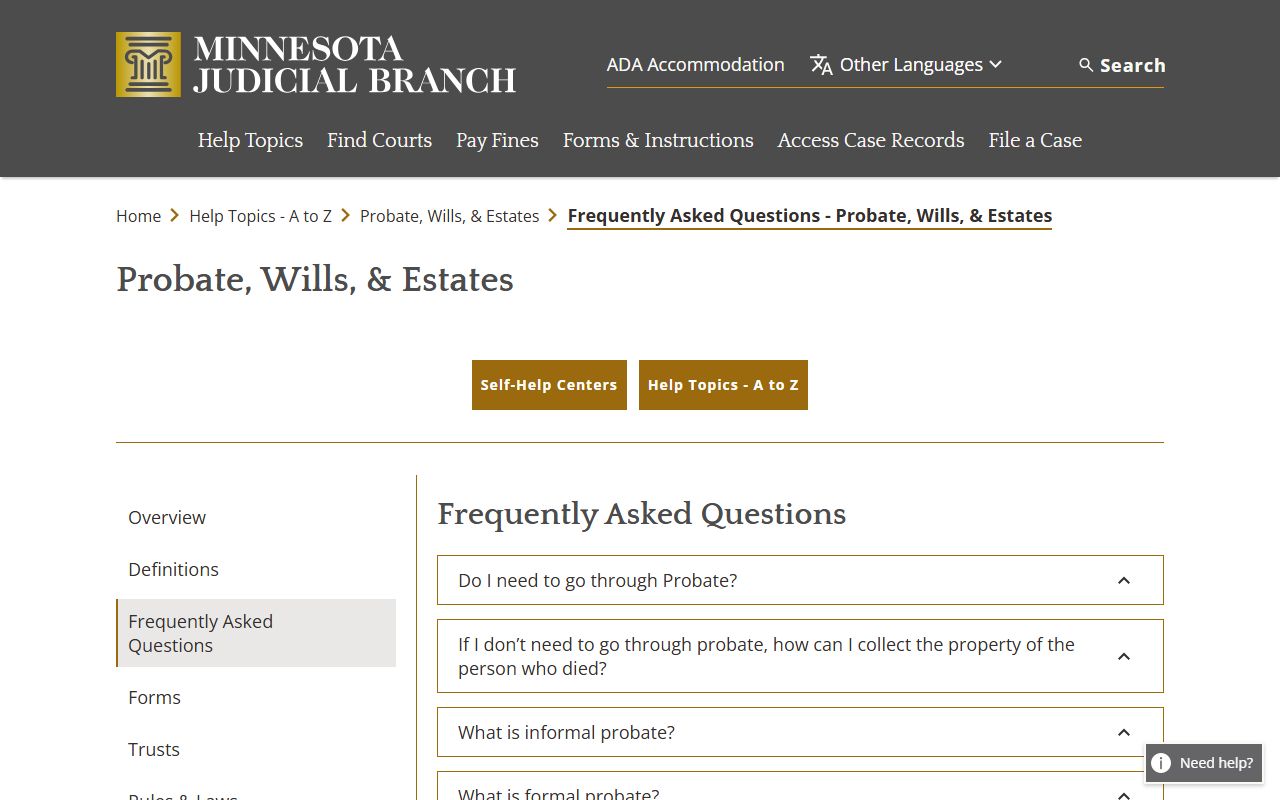
That FAQ source is the basis for distinguishing a court probate file from a small-estate affidavit that may never become a court record.
Small estate rule: The $75,000 threshold does not mean every estate below that amount avoids probate; real estate and timing rules still matter.
Informal and Formal Probate Records
The Minnesota Judicial Branch separates informal probate from formal probate. Informal probate is often used when the paperwork is complete, interested parties are not expected to dispute the matter, and court supervision can be limited. Formal probate is used when a judge must decide issues such as disputes, unclear will questions, or other matters needing more court involvement.
Both informal and formal cases can create Scott County probate records. The case file may show the application or petition, orders, notices, letters, claims, inventories, accountings, and closing documents when filed and public. MCRO document display depends on filing date, case type, and remote-access rules. A certified copy of letters or an order comes from Court Administration, not from an online screenshot.
The Judicial Branch probate rules and laws page is one of the probate manifest image sources.
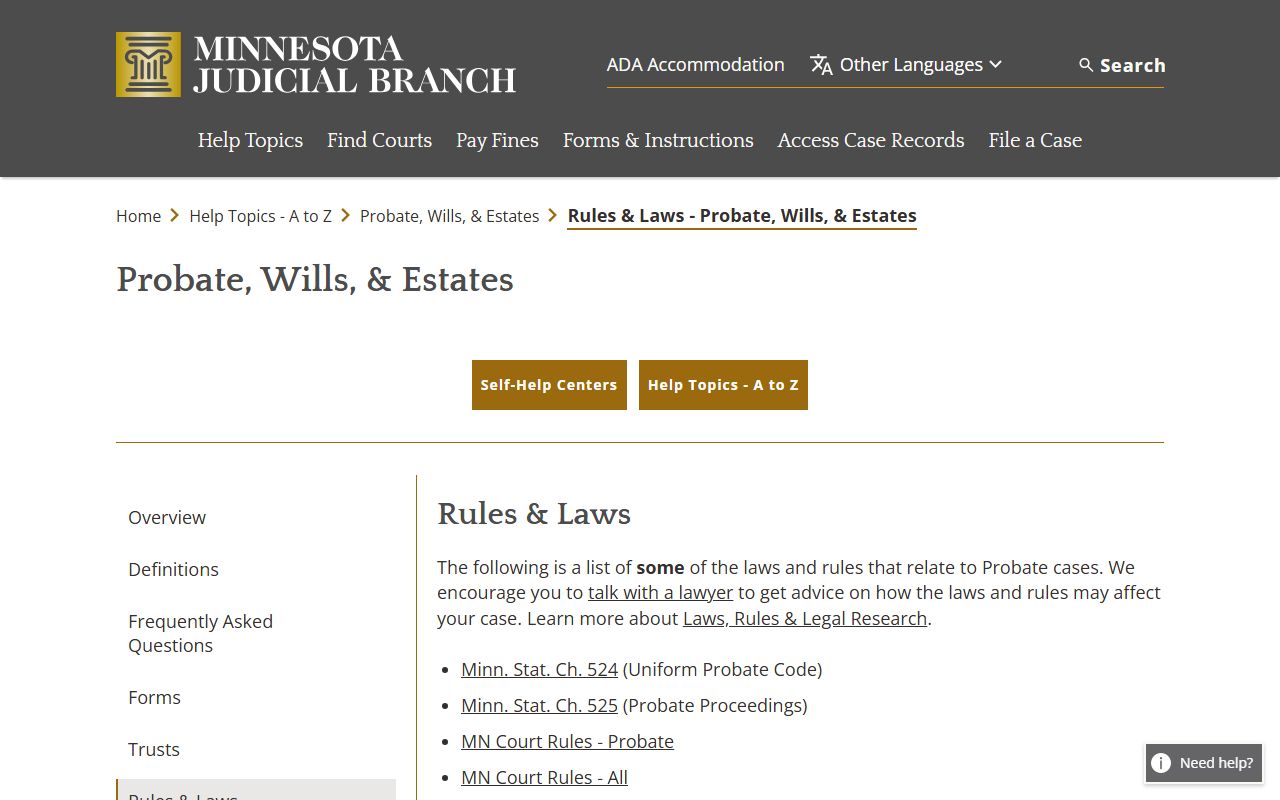
That rules source points users to Minnesota probate statutes and court rules behind Scott County probate filings.
Scott County Probate Forms and Fees
Scott County probate filings use Minnesota Judicial Branch probate forms rather than county-created pleading forms. The probate forms page includes General Probate, Informal Probate, closing, Formal Probate, Determination of Descent, Objections, Claims, Safe Deposit Box, and Demand for Notice groups. Visible form examples in the research include PRO101 Information about Probate in Minnesota, PRO202 Affidavit for Collection of Personal Property, PRO302 Demand for Notice, PRO402 Written Statement of Claim, PRO502 Safe Deposit Box affidavit support, and PRO701/702/801/802 informal probate instruction and application forms.
The Minnesota Judicial Branch probate forms page is assigned in the probate image manifest.
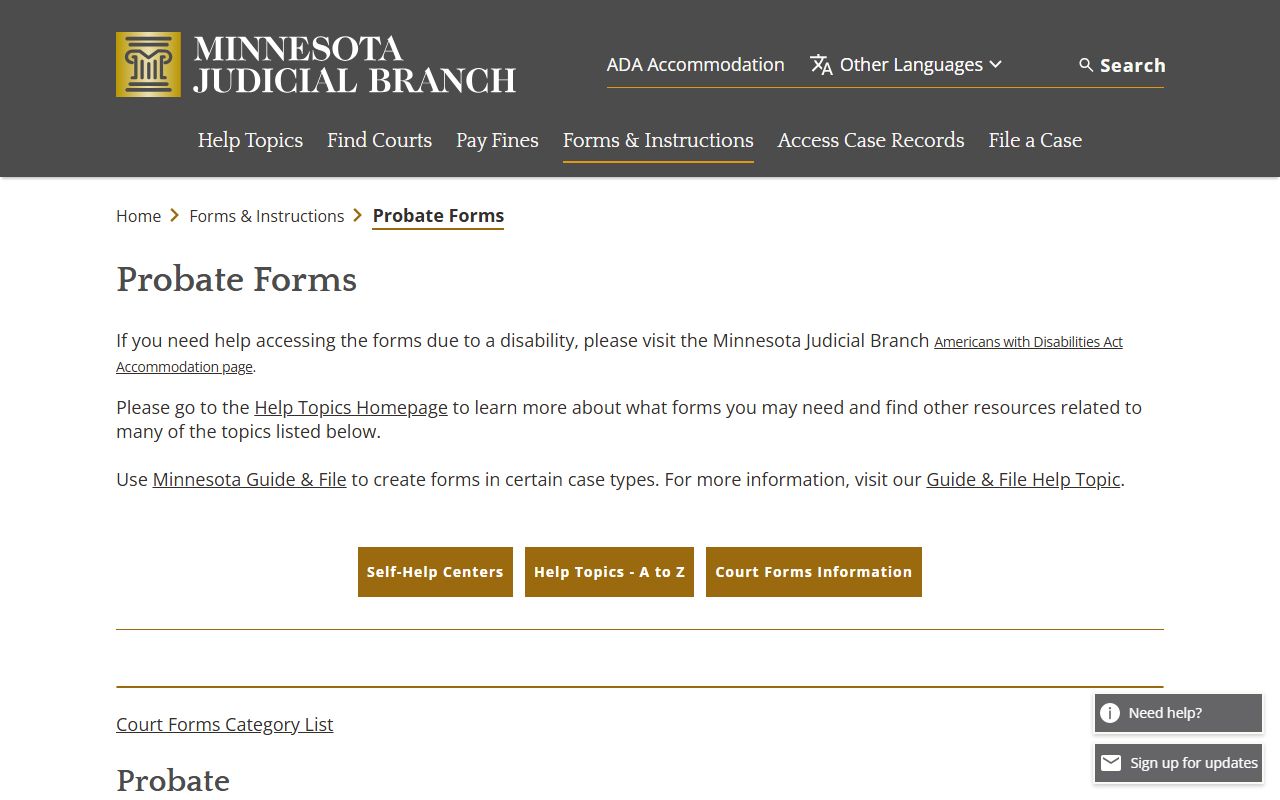
Those statewide forms are the starting point before filing a Scott County estate, trust, guardianship, or conservatorship matter.
| Probate Item | Amount |
|---|---|
| Deposit of will for safekeeping | $27 |
| Estates, trusts, guardianships, conservatorships first paper filed | $310 base fee |
| Plain copy | No fee listed on copy request form |
| Certified copy | $14 per document |
| Exemplified copy | $14 per document |
| Certified and exemplified copy | $28 per document |
Scott County Probate Copy Limits
Copy channels for Scott County probate records are MCRO for available public online documents, MPA Courthouse terminals in the Scott County Law Library, and copy request to Scott County Court Administration by email, fax, or mail. Certified copies, exemplified copies, and certified plus exemplified copies require Court Administration. A person asking for a sealed or confidential probate-related document must use the confidential or sealed access process and have legal authority or a judge's order.
Probate records can overlap with restricted information, especially guardianship, conservatorship, mental health, juvenile, medical, or confidential identifier material. Rule 4 and related confidential-information forms protect certain court filings from public access. MCRO also does not display all public documents remotely, so a missing online document does not always mean there is no public courthouse record.
The confidential information forms source is assigned to Scott County probate records in the manifest.
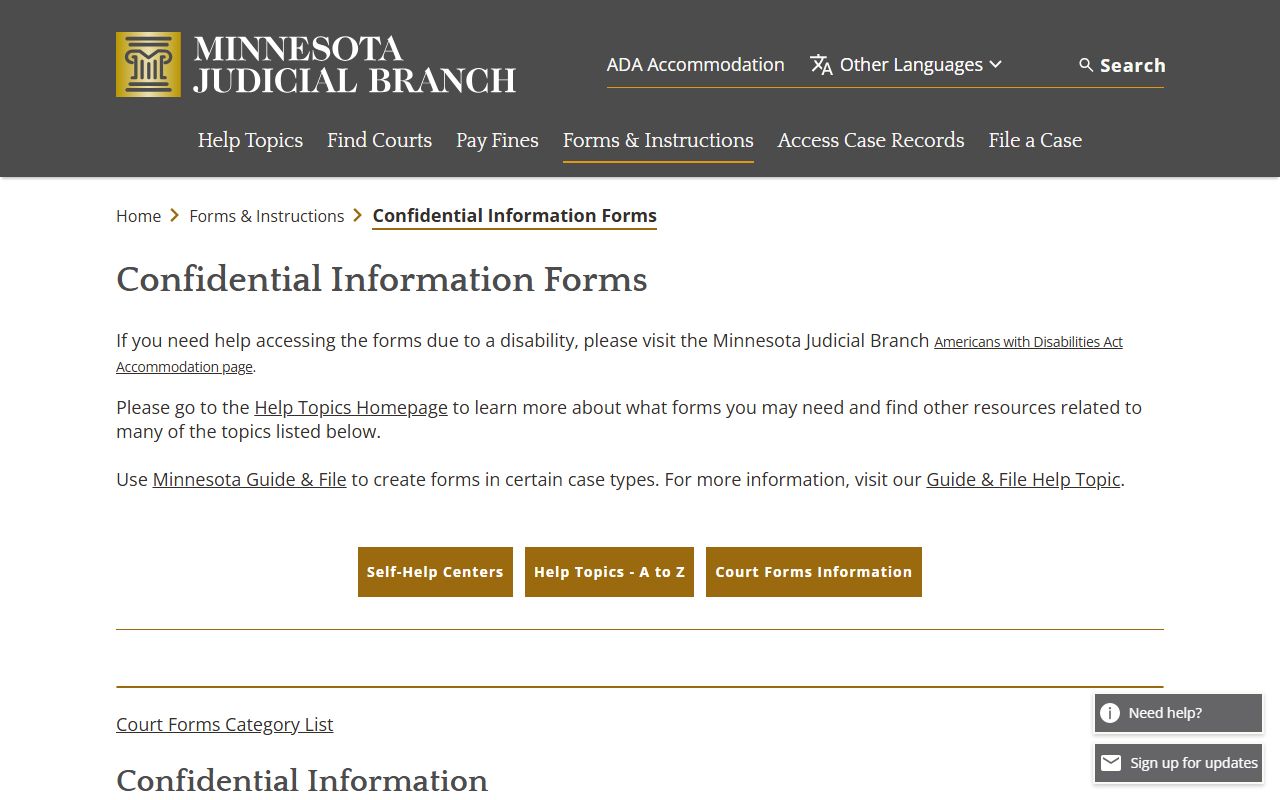
Those forms are relevant when probate documents contain protected data or when a requester seeks access to sealed material.
Juvenile access rules can also affect related court records. The manifest includes Minnesota Statutes section 260B.171 because juvenile court records have special retention and release rules.
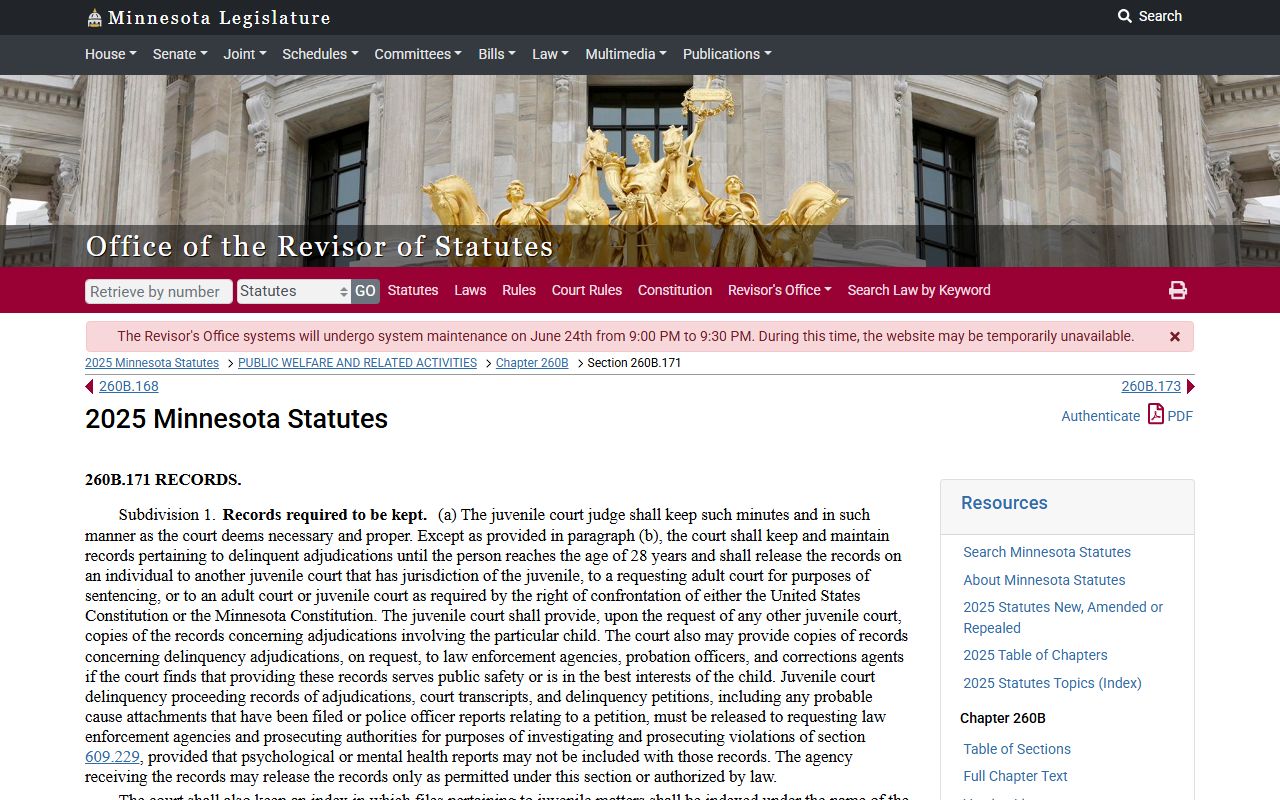
That statute is not the main estate rule, but it illustrates why probate-adjacent court records involving minors may be restricted.
Note: Use Scott County Court Administration for certified probate copies; MCRO records and search results are not certified court documents.