
Scott County Criminal Court Records
Criminal court records in Scott County are District Court records. They begin when a criminal case is filed in court and continue as the case moves through appearances, motions, hearings, plea negotiations, trial settings, dispositions, and sentencing. These files are maintained through Minnesota's state District Court system, not by a separate county clerk or local criminal-court office. Scott County Court Administration is the local copy and certification channel for District Court documents.
The case file should not be confused with a jail roster, arrest report, or police incident report. A jail roster may show custody charges and booking data. A Sheriff's report may describe law-enforcement activity. A court record shows what was filed with the court and what the judge or court administration entered. For a closer look at the charging path before the full case outcome, use the Scott County arrest records and court charge records material.
The Minnesota Public Criminal History Search is a statewide BCA source, but it is not the Scott County criminal court case file.
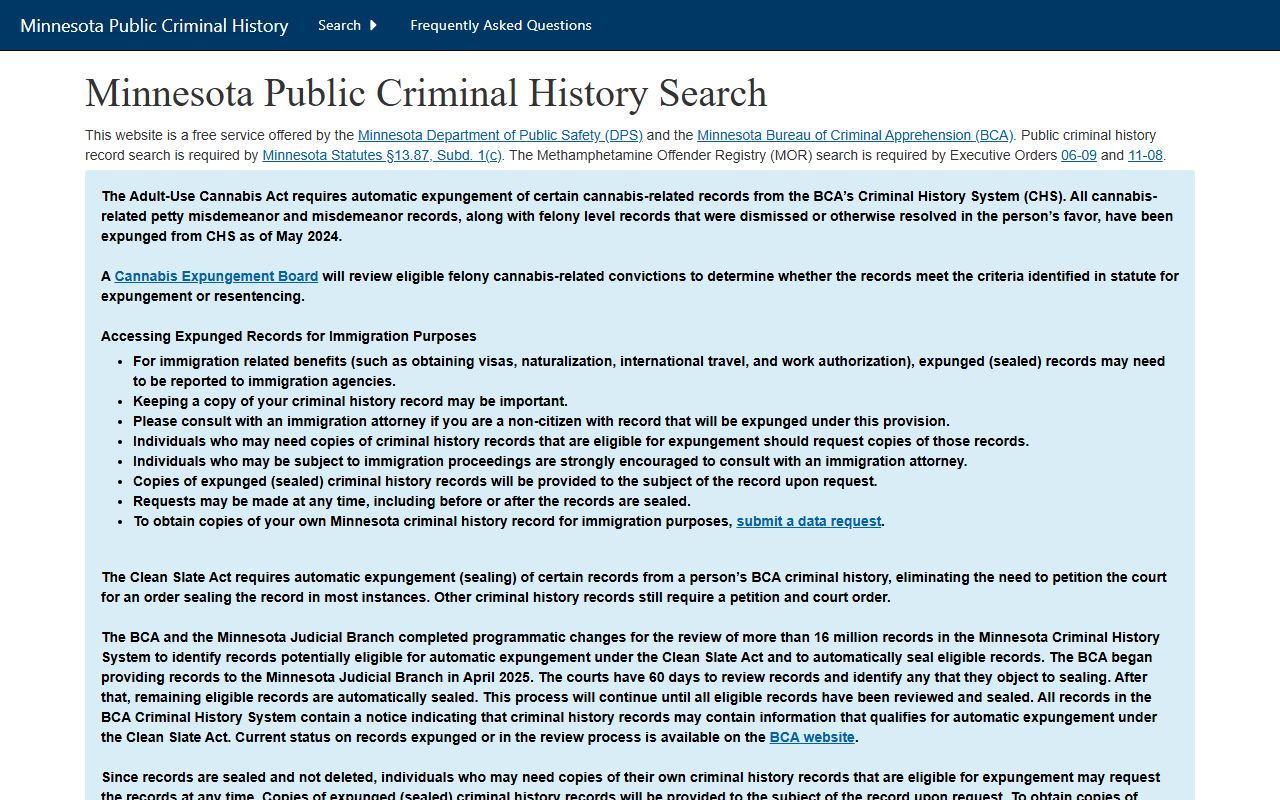
The BCA source belongs beside criminal court records because it explains a separate conviction-history channel, not the full court docket.
Search Scott County Criminal Cases
The primary court case search tool is MCRO Case Search. Criminal records can be searched by case number, eligible defendant name search, attorney, and in some contexts citation number. The case-number route is important in Scott County criminal court records because MCRO warns that pending criminal cases with no conviction do not return in defendant-name searches. Those pending cases may return by case number.
Search results can open case details with the Register of Actions. A public criminal case may show charges, amended charges, warrants if present, interim conditions, case events, hearings, dispositions, bond or bail activity, and financial information. Public online document access depends on case type, date filed, and remote-access rules.
- Open MCRO and accept the court system terms.
- Choose Case Number for the most exact Scott County criminal court records search.
- Use defendant name only when appropriate, and remember pending no-conviction criminal cases may not appear by name.
- Select Scott County as the court location if searching within statewide records.
- Open the case detail to read charges, events, hearings, pleas, dispositions, sentencing, and bond entries.
- Use Scott County Court Administration for certified copies or documents that are not available online.
Scott County Criminal Case Flow
A criminal case record grows in stages. Early entries may show a complaint, first appearance, arraignment, release conditions, bail or bond, and initial hearing settings. Later entries may show pretrial motions, omnibus hearing activity, plea negotiations, trial settings, verdicts, plea outcomes, disposition, sentencing, fines, probation, and payment data. Some events are short docket entries, while others link to public documents if remote access allows.
Case flow: Charges Filed › First Appearance / Arraignment › Pretrial / Omnibus › Plea or Trial › Disposition › Sentencing
| Stage | What Happens |
|---|---|
| Charges Filed | The prosecutor or government authority files formal accusations that open or update the case. |
| First Appearance / Arraignment | The defendant appears in court, rights and charges are addressed, and future dates or plea timing may be set. |
| Pretrial / Omnibus | The court handles motions, evidentiary issues, settlement talks, and scheduling before plea or trial. |
| Plea or Trial | The case resolves by plea, verdict, acquittal, dismissal, or other court action. |
| Disposition | The court records the outcome of each charge or the case. |
| Sentencing | The record may show jail, probation, fines, fees, conditions, and later compliance events. |
What Scott County Criminal Records Show
Scott County criminal court records can include more than a charge list. MCRO case details may show case number, title, filing date, court location, judicial officer, status, citation number, party roles, aliases, attorneys, warrants, charges, amended charges, interim conditions, events, hearings, dispositions, bond or bail activity, and financial information. A case can also contain public document links where the document is online and remotely accessible.
| Field | What It Shows |
|---|---|
| Case Number | The Scott County District Court criminal file number, often using a 70-CR pattern in examples. |
| Defendant | The person charged, with public party details where available. |
| Charges | Formal accusations, multiple counts, statute references, and amended charge history where entered. |
| Interim Conditions | Conditions imposed while the criminal case is pending. |
| Hearings | Scheduled and past events such as first appearance, arraignment, plea, omnibus, motion, or sentencing hearings. |
| Plea | The defendant's formal response to a charge when entered. |
| Disposition | The outcome of the charge or case, such as conviction, dismissal, acquittal, or other court action. |
| Sentence | Jail, probation, fines, fees, conditions, or other court-ordered consequences after conviction. |
| Bond / Bail Activity | Amounts set, status history, and posted bond or bail when recorded. |
| Financial Information | Fines, fees, payments, and credits tied to the case. |
Scott County Criminal Prosecution
Scott County uses County Attorney terminology rather than District Attorney. The Scott County Attorney's Office prosecutes felonies, gross misdemeanors, and misdemeanors occurring in Scott County and represents the county in civil litigation involving the county. The researched office contact is Government Center West, 200 Fourth Avenue West in Shakopee, with the County Attorney's Office phone listed as 952-496-8240.
The County Attorney's discovery request form is a case-party channel, not a public data request. It is for defense attorneys, pro se defendants, or a party to the criminal case. The researched fee is $15 unless the requester is a victim, and copies are available in approximately 10 days. Discovery is different from a court-record copy request because it can include case materials exchanged in the criminal process rather than certified court filings.
The BCA criminal-history search page is the separate statewide search channel for public conviction-history data.
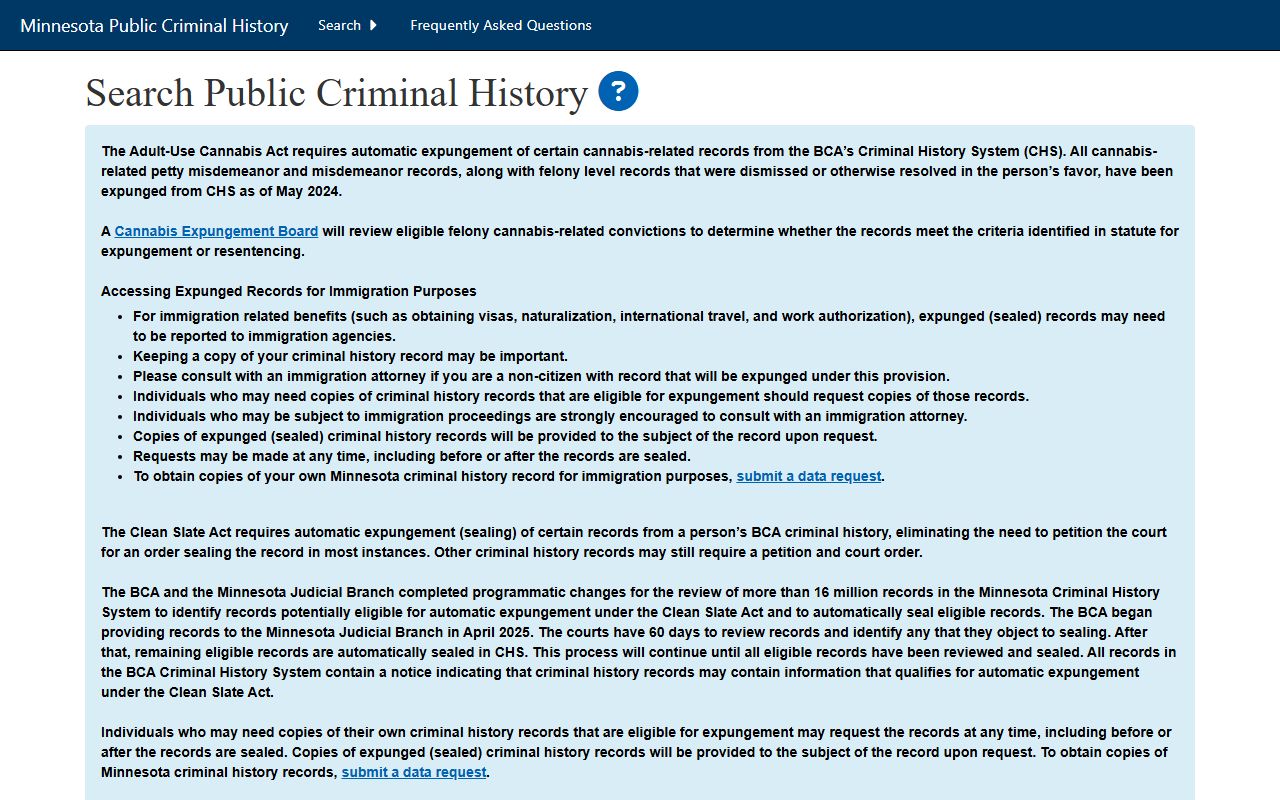
Discovery, court case records, and statewide BCA history each answer different criminal-record questions and should not be merged.
Scott County BCA History Limits
The BCA Public Criminal History Search is a Minnesota Department of Public Safety and Bureau of Criminal Apprehension system. It is useful for statewide public conviction-history data, but it is not the full Scott County criminal court record. The BCA search requires last name, first name, middle name, and date of birth. Public data includes conviction data for 15 years after sentence completion, including offenses, courts of conviction, conviction dates, and sentencing information.
The BCA website does not provide arrest data, juvenile data, out-of-state criminal history, federal data, convictions where more than 15 years have elapsed after sentence completion, or private and confidential data. MCRO should not be used as a background check substitute, and BCA history should not be treated as a complete docket. For court-file detail, use MCRO and Court Administration. For conviction-history context, use BCA.
The BCA criminal-history FAQ explains what public criminal-history search does and does not include.
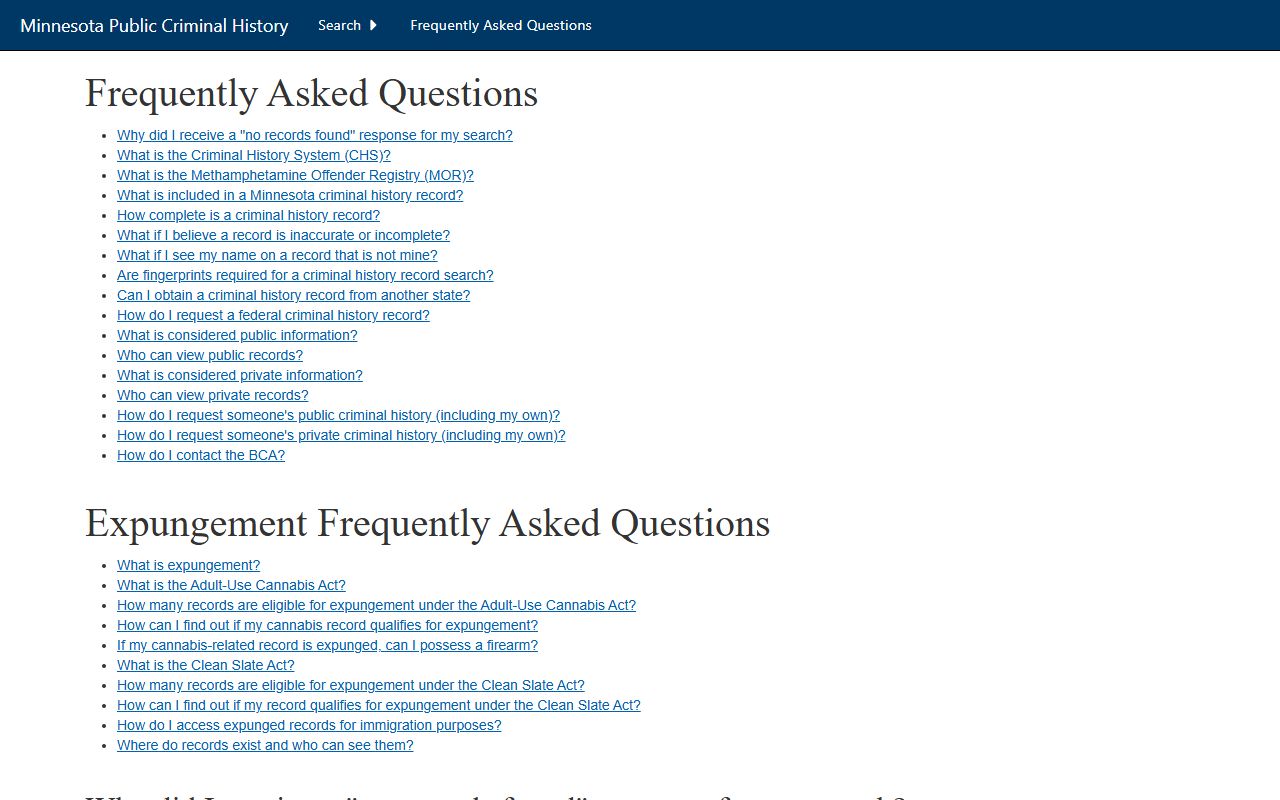
The FAQ source supports the key distinction between public conviction-history data and the detailed Scott County criminal case record.
Minnesota Statutes section 13.87 governs criminal-history data classification.
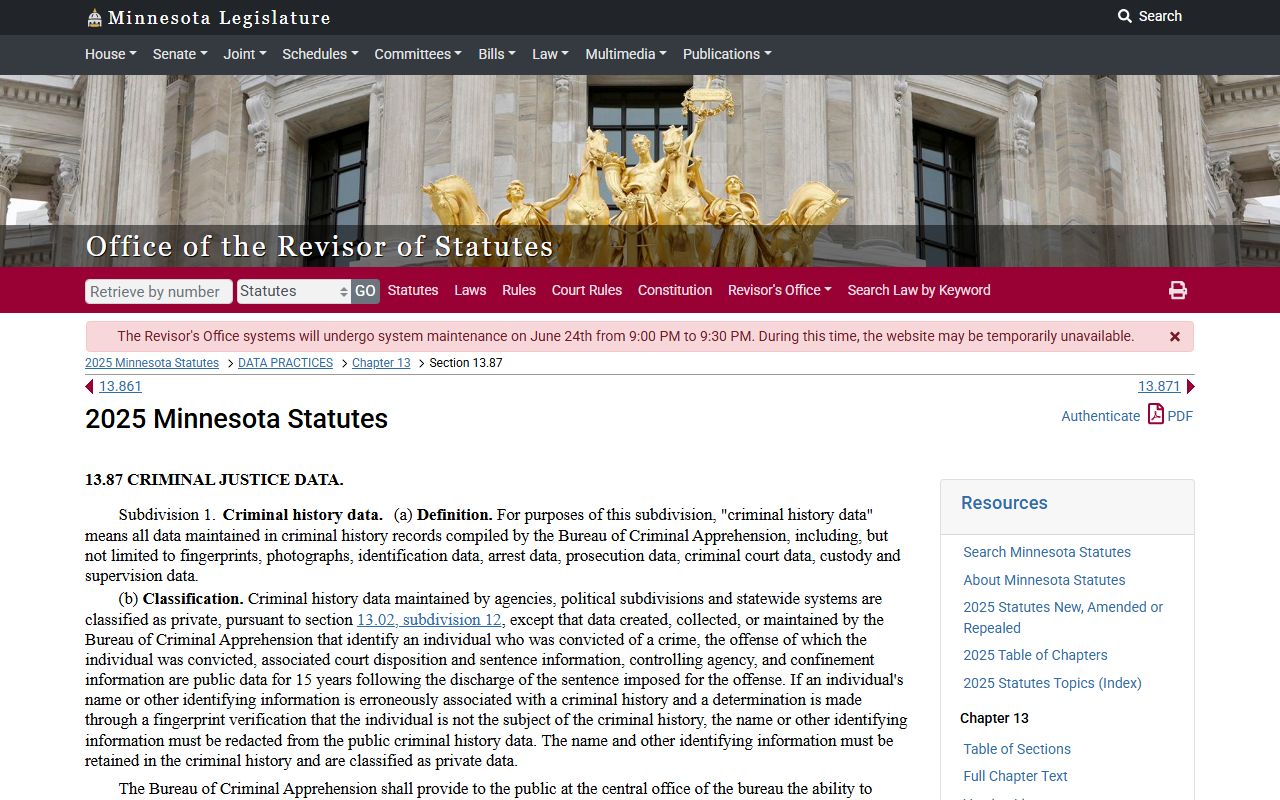
The statute source explains why BCA criminal-history dissemination is separate from ordinary court-record lookup.
Scott County Charges vs Convictions
A charge is an accusation. A conviction is a finding of guilt by plea, verdict, or adjudication. Scott County criminal court records can show charges that were amended, reduced, dismissed, or resolved without a conviction. This is why reading only the first charge row can misstate the case outcome. The disposition and sentence sections must be read with the charge section.
| Charge | Conviction | |
|---|---|---|
| Meaning | A formal accusation filed in court. | A final finding of guilt by plea, verdict, or adjudication. |
| Timing | Appears early and can change during the case. | Appears after plea, verdict, or other qualifying court action. |
| Record Use | Shows what was alleged and prosecuted. | Shows the outcome that may trigger sentencing and BCA public conviction history. |
| Possible Change | May be amended, reduced, dropped, or dismissed. | May later be affected by appeal, expungement, or other court order. |
Note: A Scott County criminal court record should be read through disposition and sentencing before drawing conclusions from charge text alone.
Scott County Defense Access
The Minnesota Judicial Branch public defender page says the court may appoint an attorney for a person charged with a misdemeanor, gross misdemeanor, or felony with possible jail time if they cannot afford one. A person can ask for a public defender at any time, ideally at or before first appearance. Application channels include the online public defender application, a Judicial Branch application form, or a Board of Public Defense form filed with court.
The researched Scott County legal referrals list points to the First Judicial District Public Defender, Chaska Office, 207 North Chestnut Street, Suite 201, Chaska, MN 55318, phone 952-361-3810, for court-appointed services for low-income people in criminal and juvenile delinquency cases. The court reviews financial eligibility, and an eligible applicant cannot choose the assigned Assistant Public Defender.
Scott County Sealed Criminal Records
Sealed and expunged criminal records are not ordinary public lookup records. Scott County Court Administration cannot provide confidential documents without a signed judge's order granting access. Minnesota expungement is generally a District Court order that seals a criminal conviction or arrest record from public view. Some eligible records may also be sealed through Clean Slate automatic expungement.
Minnesota Chapter 609A contains criminal expungement law.
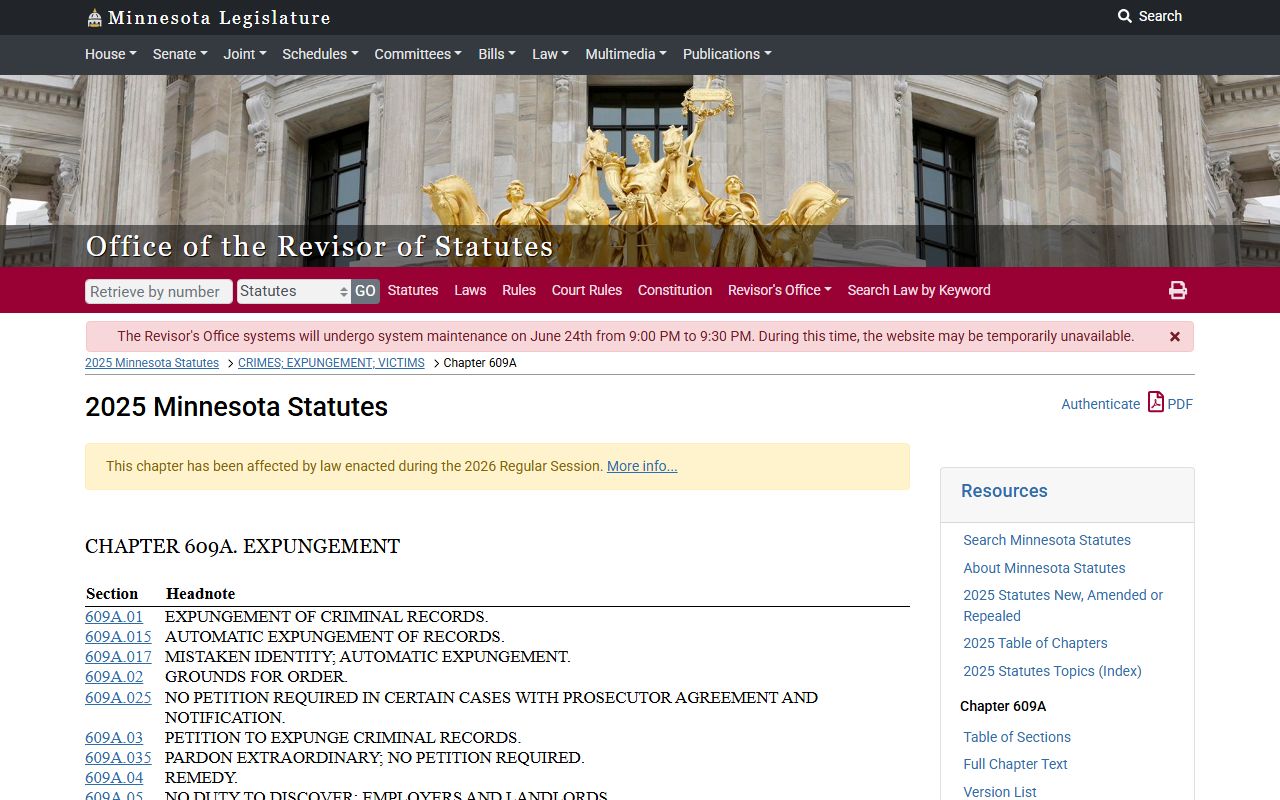
Chapter 609A is the main legal source for Scott County criminal expungement analysis, including eligibility and process limits.
Minnesota Statutes section 609A.03 covers petition-based expungement.
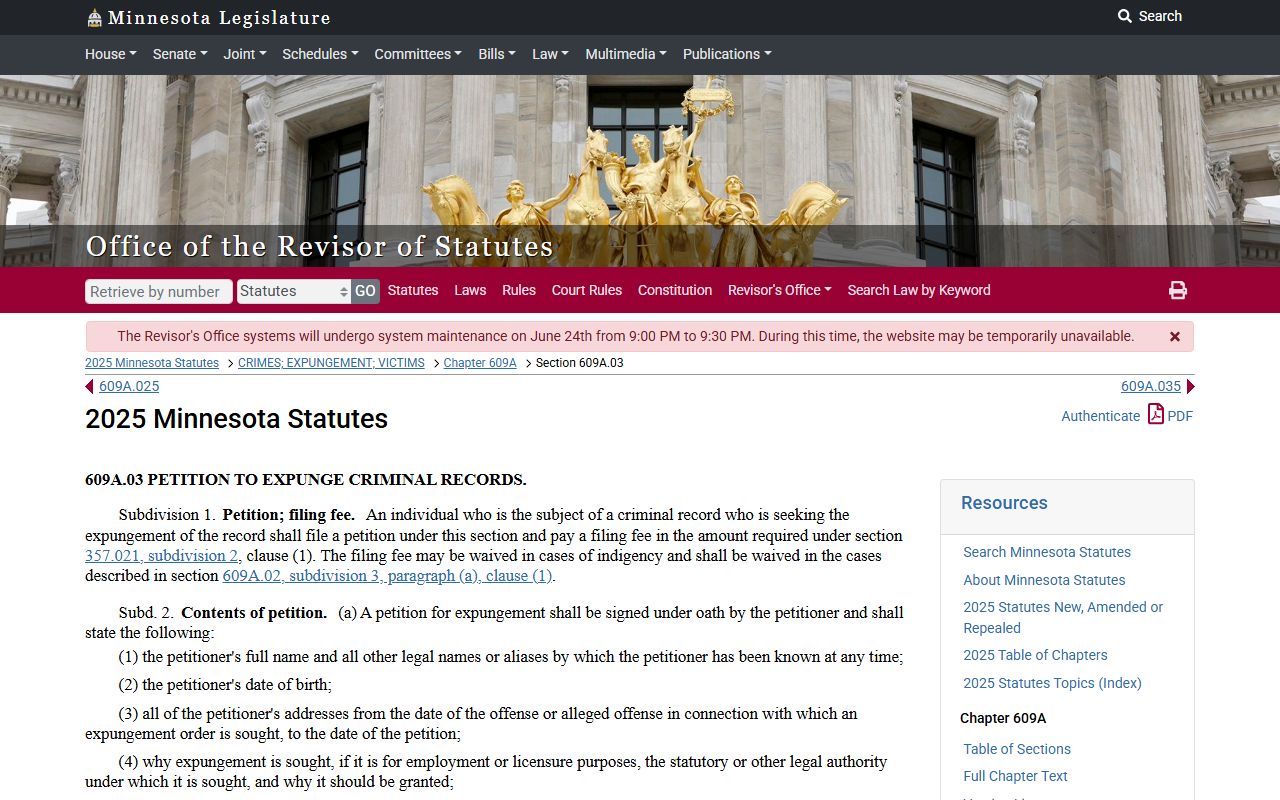
Petition-based expungement is filed in court unless a record qualifies for automatic relief.
| Sealed | Expunged | |
|---|---|---|
| Public View | Hidden from general public access unless legal authority allows viewing. | Sealed from public view by petition or automatic Clean Slate rules when eligible. |
| Court Access | May require a judge's order or approved confidential-record access request. | Agencies may retain or access records under statutory exceptions. |
| How It Happens | By rule, statute, court order, or confidential filing status. | By petition under section 609A.03 or automatic relief under section 609A.015 when eligible. |
| Limits | Not all sealed records are destroyed. | Some convictions and offender-registration-related offenses may not be eligible. |
Scott County Criminal Records Access
Public access to Scott County criminal court records rests on Judicial Branch rules and Minnesota statutes. Minnesota Rule of Public Access 2 presumes Judicial Branch records are open during regular office hours unless another rule, statute, or court order restricts access. Rule 8 explains why online remote access is narrower than courthouse-terminal access.
Restricted criminal-related records include juvenile delinquency, sealed records, confidential filings, and some pending matters that do not show by name in MCRO. Minnesota Statutes section 260B.171 gives juvenile court records special retention and release rules. Adult criminal court records can still have redactions, sealed entries, nonpublic documents, or case-number-only search limits.
Important: Criminal court records and BCA history are public-record tools, not FCRA consumer reports for regulated screening uses.
Scott County Criminal Record Copies
Use Scott County Court Administration for certified criminal court copies, older public documents, or records not available online. The office handles District Court records only. Sheriff's Office records, jail data requests, and County Attorney discovery requests are separate channels with different purposes and eligibility rules.
For a criminal court copy request, include the case number if known, defendant name, case type, document name or description, date or index number if available, copy type, delivery method, and contact details. Court Administration can answer questions at 952-496-8200. The broader Scott County court records workflow covers civil, family, probate, traffic, and other case types beyond criminal files.
Scott County Court Administration
200 Fourth Avenue W.
Shakopee, MN 55379
952-496-8200
Fax: 952-496-8211
Public Record Search
Sponsored Results